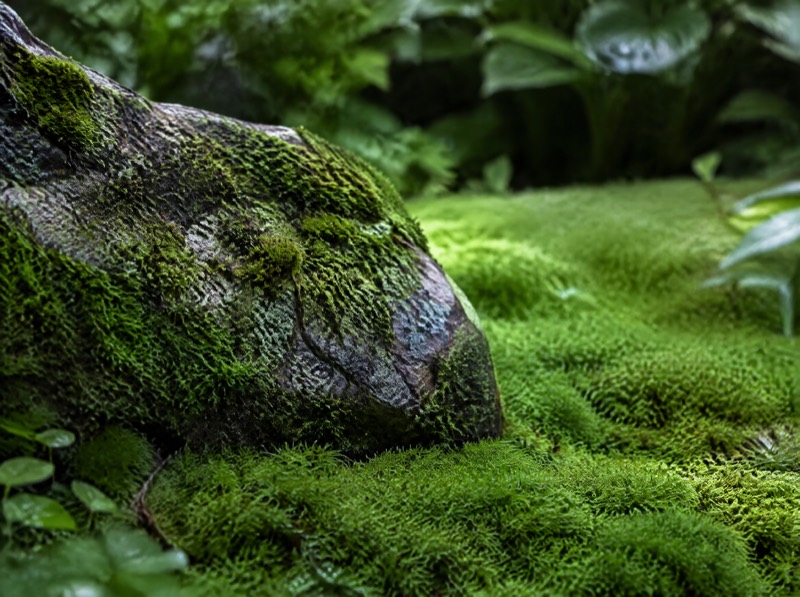
Most people fight moss. In a shaded garden, it is the best ally you have. How to encourage it, and how to keep it looking its best.
Moss is the plant everyone asks me how to kill and nobody asks me how to grow. This is a mistake. In shade, moss is the finest groundcover available: evergreen, weed-suppressing, free, and it makes a garden look a hundred years old in about three.
Why moss thrives where grass fails
Moss needs moisture, shade and low fertility — exactly the conditions that make lawn grass thin and sad. Fighting moss with lawn feed and drainage is a war against your own site. Let the moss have the ground it wants, and spend your energy on plants that want the same conditions.
Encouraging moss
If you want moss on a path, a stone or a bare patch of soil, the recipe is patience plus three things: damp, shade, and a slightly acidic surface. Brush the area clean of leaves and debris, keep it consistently damp through the first summer, and if you can, transplant small patches from elsewhere — moss grows readily from fragments. Do not fertilise. Fertility favours grass and weeds; moss prefers poverty.
Keeping it looking good
The main enemy of a moss garden is fallen leaves, which smother it over winter. A light brush in late autumn and again in early spring is all the maintenance it needs. Never rake hard enough to tear the surface, and avoid walking on frosty moss — it bruises and takes months to recover.
Moss in the design
Use moss deliberately: between paving stones, over a stone wall, as a carpet under ferns, around the base of a maple. It unifies the border and holds moisture around the roots of everything else. A mossy stone is a small masterpiece, and the garden will make them for free.
The patient gardener's reward is a surface that looks like it has always been there. Nobody achieves that with grass in deep shade. Everybody can achieve it with moss.