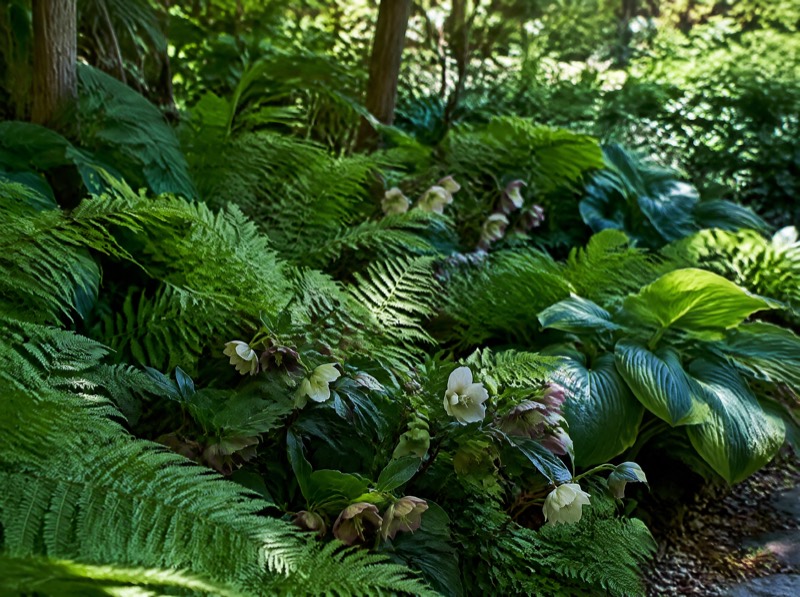
Shade gardening is not a consolation prize. With the right structure, leaf shapes and layers, a north-facing border can outshine a sunny one.
The phrase “shade border” conjures an image of bare soil with three straggly ferns and a lot of apology. It should not. Some of the most beautiful gardens I have stood in were in permanent shade — because shade rewards foliage, and foliage, done well, is more interesting than flowers.
Start with structure, not plants
In shade, the eye has less colour to follow, so it follows shape. Give the border something to look at in winter: a small multi-stemmed tree, a large upright stone, a sculptural empty pot. Structure is what makes the border read as designed rather than leftover.
Layer by leaf, not by flower
Think in three layers. Ground: moss, epimedium, wild ginger. Middle: hostas, ferns, hellebores, heuchera. Canopy: a maple, a birch, a large hydrangea. The layers overlap so the soil never shows, and each layer offers a different leaf scale — big hosta leaves against fine fern fronds against round epimedium.
Use green as a colour
Shade gardeners get the best greens in horticulture: chartreuse, glaucous blue, deep forest, silver. A border in twelve shades of green is not boring; it is sophisticated. Add one accent — a white hellebore, a pale foxglove — and the whole thing lifts.
Repeat, don't scatter
One hosta looks like a mistake. Nine hostas of the same variety, spaced rhythmically, look intentional. Shade plants are more expensive than seed, so buy fewer varieties and repeat them. Repetition is what separates a collection from a design.
Let the moss win
At some point the moss will arrive, and the correct response is gratitude. Moss is the best groundcover in shade: evergreen, free, and it makes the border look established years before it is. Keep it damp, brush off fallen leaves, and never rake it. A mossy edge is a garden that has settled into itself.
Shade is not the absence of possibility. It is a different palette, a different pace, and — if you let it — a better garden than the sunny one next door.